Adapt, do not erase
Keep the meals that connect you to people. Adjust portions, add variety, or change preparation only where it makes sense.
Advice travels poorly when it forgets where people live. Markets, warungs, family tables, religious observances, work hours, and the tropical climate all shape how food is chosen and shared in Indonesia.
A generous editorial view asks how a person can add nourishment without discarding belonging. Familiar ingredients often offer more room for experimentation than imported rules.
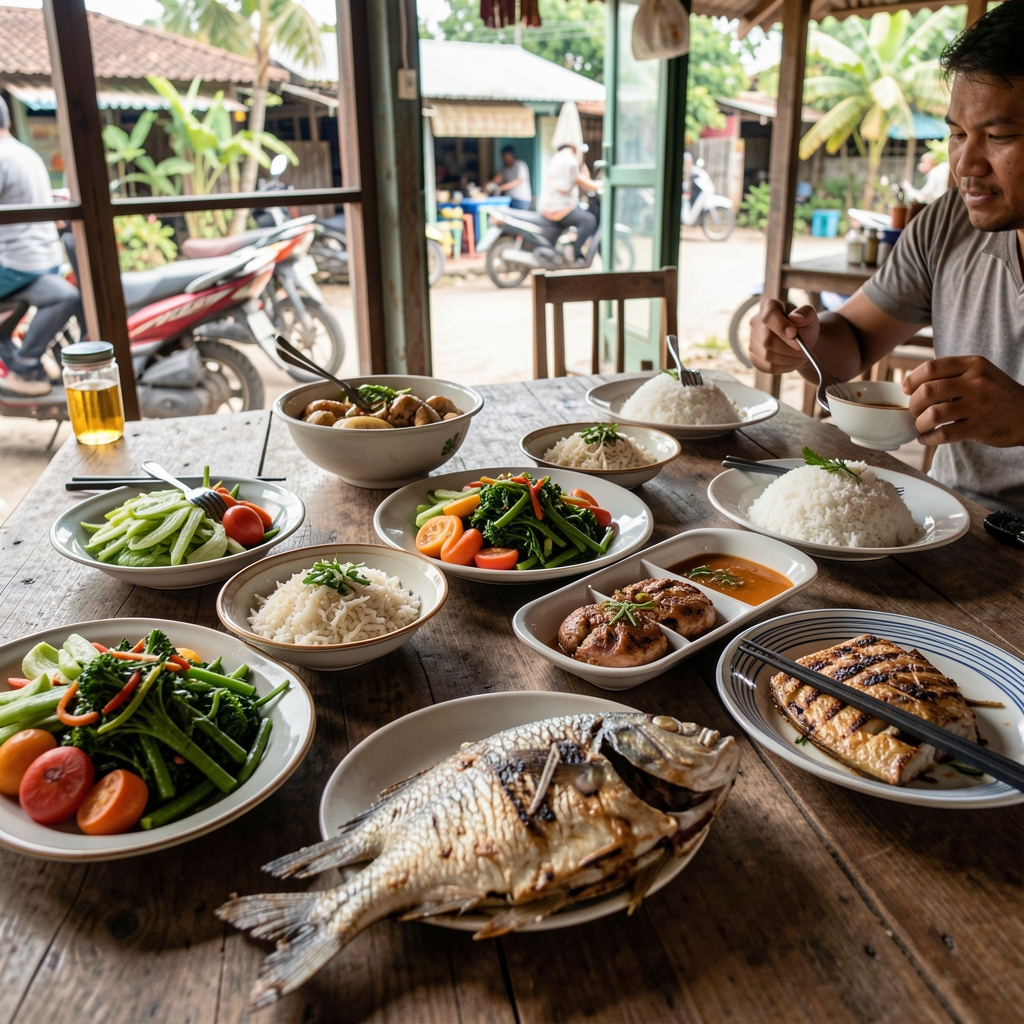
Keep the meals that connect you to people. Adjust portions, add variety, or change preparation only where it makes sense.
Choose a few flexible ingredients that can become breakfast, lunch, or dinner rather than purchasing for an imagined perfect schedule.
Planning and cooking are household practices. A sustainable pattern distributes effort instead of placing it on one person.
| Moment | Useful question | Gentle option |
|---|---|---|
| Shopping | What is fresh and affordable this week? | Choose one vegetable, fruit, and protein to build around |
| Preparation | What can be made once and used twice? | Cook a base and vary the serving |
| Eating | What makes this meal satisfying? | Notice taste, pace, company, and comfort |
Food literacy is not knowing the name of every nutrient. It is being able to make a decent next meal in the circumstances you actually have.